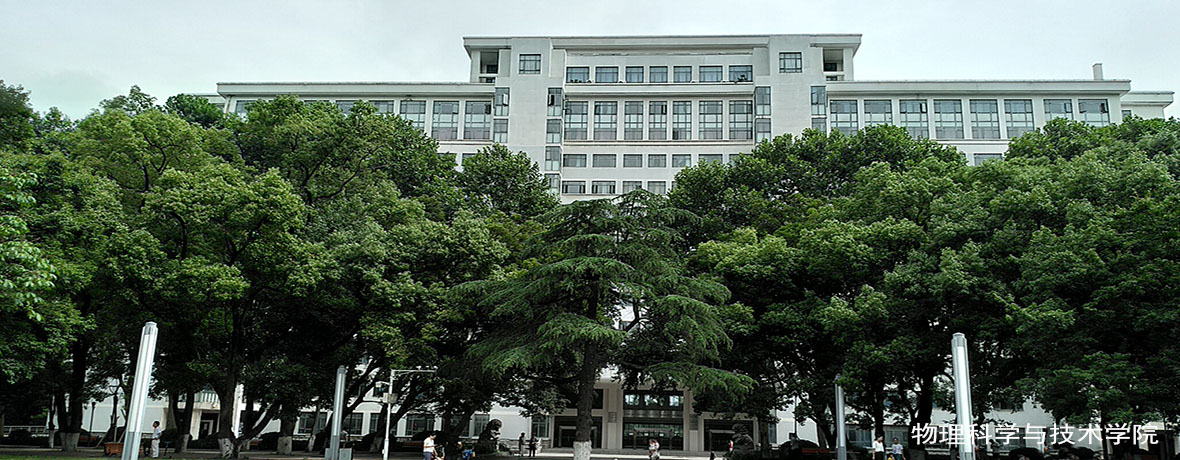
彭云辉,hg皇冠官网副研究员、博士生导师。长期从事生物物理与生物信息学交叉领域研究,聚焦于利用统计物理与分子动力学模拟方法,结合人工智能与物理建模,系统解析蛋白质、核酸等生物大分子的结构特征、功能机制与动态调控过程,并深入探讨其在癌症等重大人类疾病中的作用机制。近年来,相关研究成果发表于Nature Communications、eLife、Nucleic Acids Research、Briefings in Bioinformatics、Biophysical Journal、Communications Biology等国际高水平期刊,累计发表SCI论文50余篇。主持国家自然科学基金、湖北省和武汉市自然科学基金等多项。2022年和2023年分别入选武汉市和湖北省高层次人才项目。
学习工作经历:
2009年9月-2013年7月:西安交通大学,物理系, 本科
2013年8月-2018年12月:美国克莱姆森大学,物理与天文系,博士
2017年8月-2018年7月:法国巴黎第七大学,访问学者
2019年3月-2022年7月:美国国立卫生研究院,国家生物信息与技术中心,博士后
2022年9月-至今: hg皇冠官网,hg皇冠官网,生物物理研究所,副研究员,博士生导师
科研项目:
hg皇冠官网人才启动经费 2022-2027 主持
国家自然科学基金青年项目(C类) 2023-2025 主持
武汉市自然科学基金(探索计划) 2024-2026 主持
湖北省自然科学基金(面上项目) 2026-2028 主持
主要研究方向:
1. 生物分子动力学; 利用统计物理和多尺度动力学模拟,研究原子、分子层面上不同生物大分子的构象变化、相互作用、别构效应、自组装等分子机理,诠释生物系统不同调控机制以及与疾病的关系。
2. 致病性蛋白突变预测; 结合物理模型和人工智能,预测突变对蛋白质动态构象、结合作用、折叠稳定性等的影响,开发定量分析致病性蛋白突变的模型和算法。
3. 生物大分子网络; 结合不同实验数据,建立大尺度生物分子相互作用网络,分析生物网络结构和性质,探究生物调控过程和信号传递机理。
4. 生物大分子之间的静电相互作用; 定量分析静电相互作用在不同生物大分子结合作用、自组装等作用机制。
课题组研究基础扎实,学术氛围良好,并与加拿大女王大学、美国克莱姆森大学等国内外多所大学建立了良好的合作关系,欢迎对相关研究感兴趣的同学报考本课题组的硕士和博士研究生。
办公地点:9号楼11楼1151室
联系方式:yunhuipeng@ccnu.edu.cn
近五年代表性论文:
(1). Houfang Zhang; Tiejun Wei; Anna R. Panchenko; Catherine A. Musselman; Yunhui Peng*; “MD2NMR: linking molecular dynamics with NMR relaxation”, Biophysical Journal, 2026,
(2) Gege Liu; Wang Xu; Guanhua Hu; Houfang Zhang; Yunhui Peng*; Cancer mutations rewire linker histone interaction network and compromise chromatosome stability, Biophysical Journal, 2026, 125: 1415-1433.
(3) Guanhua Hu; Houfang Zhang; Wang Xu; Gege Liu; Yunhui Peng*; Selective binding of divalent cations reshapes nucleosome mechanics and unlocks histone tail dynamics, Communications Biology, 2026, 9:365.
(4) Harrison Fuchs#; Yunhui Peng#; Shine Ayyapan#; Ruben Rosas; Houfang Zhang; Anna Panchenko*; Catherine Musselman*; G34R cancer mutation alters the conformational ensemble and dynamics of the histone H3.3 tails, Nucleic Acids Research, 2026, 54(2): gkaf1381.
(5) Houfang Zhang; Wenhan Guo; Wang Xu; Anbang Li; Lijun Jiang; Lin Li; Yunhui Peng*; Electrostatic interactions in nucleosome and higher-order structures are regulated by protonation state of histone ionizable residue, The Journal of Chemical Physics, 2025, 162: 105101.
(6) Wang Xu; Anbang Li; Yunjie Zhao*; Yunhui Peng*; Decoding the effects of mutation on protein interactions using machine learning, Biophysics Reviews, 2025, 6: 011307.
(7) Wang Xu; Houfang Zhang; Wenhan Guo; Lijun Jiang; Yunjie Zhao*; Yunhui Peng*; Deciphering principles of nucleosome interactions and impact of cancer-associated mutations from comprehensive interaction network analysis, Briefings in Bioinformatics, 2024, 25: bbad532.
(8) Yunhui Peng*; Wei Song; Vladimir Teif; Ivan Ovcharenko; David Landsman; Anna Panchenko*; Detection of new pioneer transcription factors as cell-type-specific nucleosome binders, eLife, 2024, 12: RP88936.
(9) Wenhan Guo; Dan Du; Houfang Zhang; Jason Sanchez; Shengjie Sun; Wang Xu; Yunhui Peng*; Lin Li*; Bound ion effects: Using machine learning method to study the kinesin Ncd's binding with microtubule, Biophysical Journal, 2024, 123: 2740-2748.
(10) Peng, Yunhui, Shuxiang Li, Alexey Onufriev, David Landsman, and Anna R. Panchenko. "Binding of regulatory proteins to nucleosomes is modulated by dynamic histone tails." Nature Communications, 2021, 12.1: 1-12.